

Why Pain Isn’t Always Where You Feel It
Have you ever pressed a sore spot in your neck and felt discomfort somewhere else? Or wondered why pain in your lower back or shoulder might be connected to tension in another part of your body?
These experiences help explain why trigger point therapy and myofascial release have become important approaches in therapeutic bodywork.
Both techniques consider how muscles, connective tissue and movement patterns interact. Although closely related, they work in slightly different ways, and understanding that distinction can help explain why working on one area of the body may influence how another feels.
Their development also tells a fascinating story, from early traditions of hands-on healing to the pioneering practitioners and scientific discoveries that continue to inform modern bodywork.
What Is the Difference Between Trigger Point Therapy and Myofascial Release?
Trigger point therapy and myofascial release are both hands-on approaches used to address muscular discomfort and restricted movement. The main difference lies in the tissues and patterns each technique focuses on.

Trigger Point Therapy: Targeting Muscle Knots
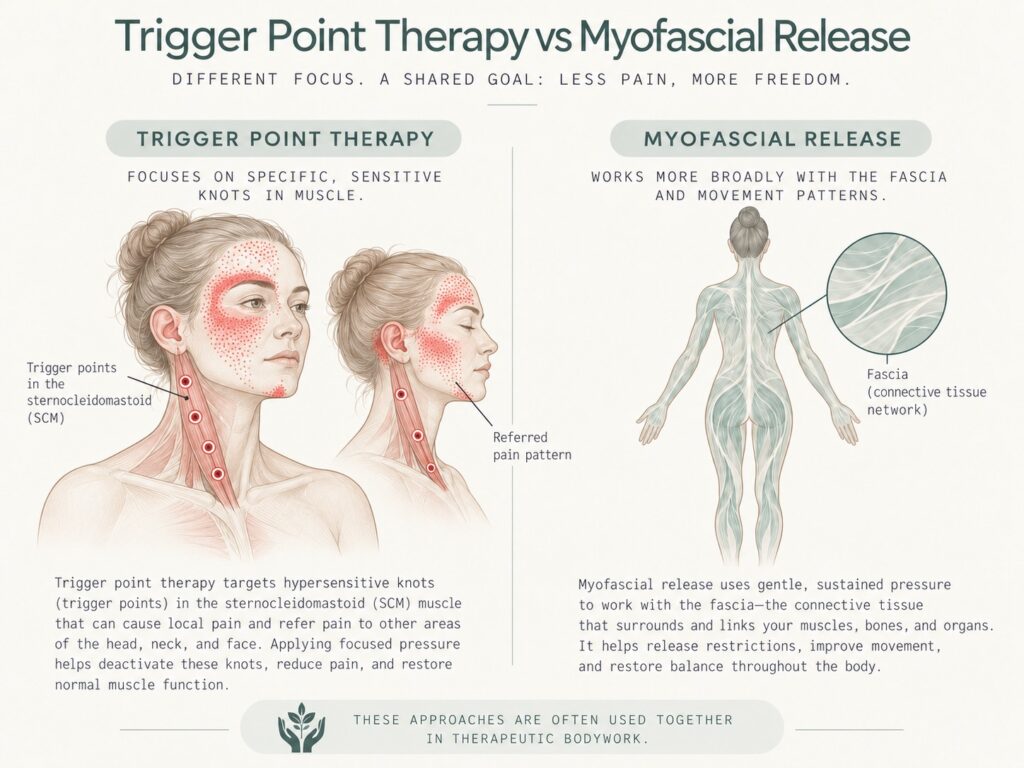
Trigger points are sensitive areas within muscles, often described as knots, that may cause discomfort locally or refer pain to another part of the body.
For example, trigger points around the neck may contribute to headaches, while those in the muscles of the shoulders or lower back can cause pain locally or refer discomfort to other areas of the body.
Trigger point therapy involves applying targeted, controlled pressure to these sensitive areas, with the aim of reducing discomfort and improving muscular function.
Myofascial Release: Working With the Body’s Connective Tissue
Fascia is the connective tissue network that surrounds and supports muscles, bones, nerves and organs. It helps maintain the body’s structure and plays a role in movement and sensory awareness.
Myofascial release uses sustained pressure and gentle stretching techniques to work with areas of perceived tension or restriction.
Rather than focusing exclusively on an individual muscle, the practitioner considers how different tissues and areas of the body interact.
The essential distinction: Trigger point therapy focuses on specific sensitive areas within muscles, while myofascial release takes a broader approach to the connective tissues and surrounding movement patterns.
In practice, the two techniques can complement each other, particularly when discomfort involves several interconnected areas.
The Origins of Trigger Point Therapy and Myofascial Release
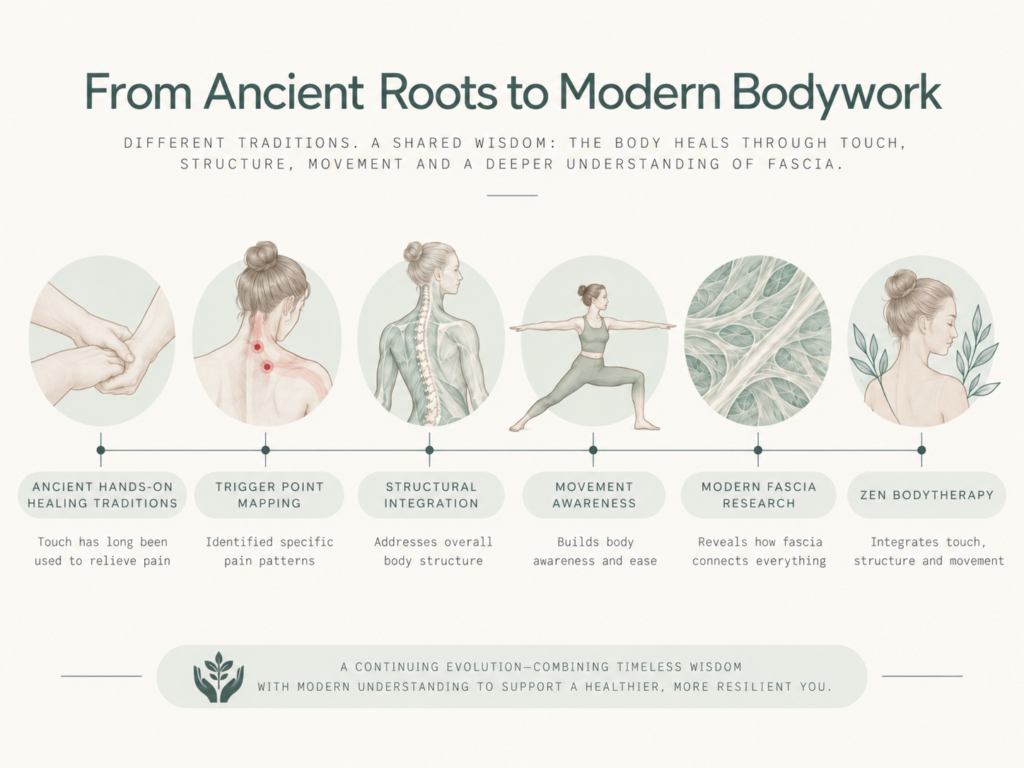
Although these therapies have developed into recognized modern bodywork approaches, their underlying principles have parallels in traditional healing practices going back centuries.
In traditional Chinese medicine, ashi points are sensitive areas identified through touch and used in acupuncture and related techniques. Similarly, Ayurvedic traditions in India developed approaches involving specific points on the body, known as marma points.
These practices are not identical to modern trigger point therapy, but they reflect a longstanding interest in the relationship between touch, sensitive areas and physical well-being.
As anatomy and medical knowledge advanced, practitioners began developing more systematic ways to understand muscular pain and connective tissue function.
Janet Travell and David Simons: Mapping Trigger Points
One of the most important figures in modern trigger point therapy was Dr Janet Travell, an American physician known for her work on myofascial pain.
Working alongside Dr David Simons, Travell investigated how sensitive areas in muscles could produce patterns of referred pain.
Their influential book, Myofascial Pain and Dysfunction: The Trigger Point Manual, first published in 1983, helped establish a systematic approach to identifying trigger points and understanding their relationship to muscular discomfort.
Their work remains an important historical foundation for practitioners working with myofascial pain today.
Ida Rolf: The Development of Structural Integration
Another influential pioneer was Dr Ida Rolf, a biochemist who developed the bodywork approach known as Structural Integration, commonly associated with Rolfing.
Beginning in the 1940s, Rolf explored the relationship between connective tissue, posture, movement and the body’s organization in relation to gravity.
Rather than viewing muscles as isolated structures, she considered how the entire body adapts to physical demands and habitual patterns.
Her approach developed into a structured series of ten sessions, designed to work progressively with different aspects of the body’s structure and movement.
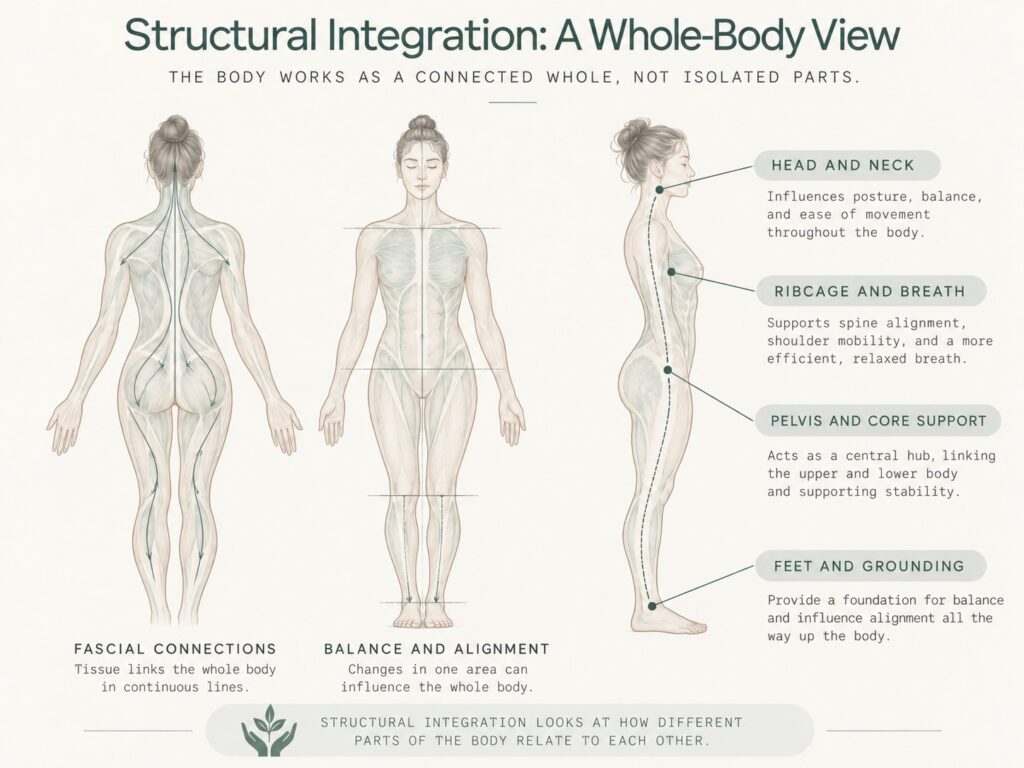
Rolf’s ideas helped establish a broader way of thinking about bodywork, one that looks beyond the immediate location of discomfort to consider how the body functions as a connected system.
Moshe Feldenkrais: Understanding Movement and Awareness
While Ida Rolf focused on the body’s structure, Dr Moshe Feldenkrais approached physical function through movement and learning.
A physicist, engineer and martial artist, Feldenkrais developed a method that uses gentle, exploratory movements to improve body awareness and coordination.
His work emphasized the nervous system’s role in how we learn and repeat movement patterns.
This introduced another important dimension to therapeutic bodywork: understanding not only where tension occurs, but how habitual movement and physical awareness may contribute to it.
The Evolution of Modern Myofascial Therapy
As these approaches developed, other practitioners contributed new perspectives on the relationship between connective tissue, movement and pain.
John F. Barnes helped popularise a particular approach to myofascial release through hands-on treatment and professional education beginning in the 1970s.
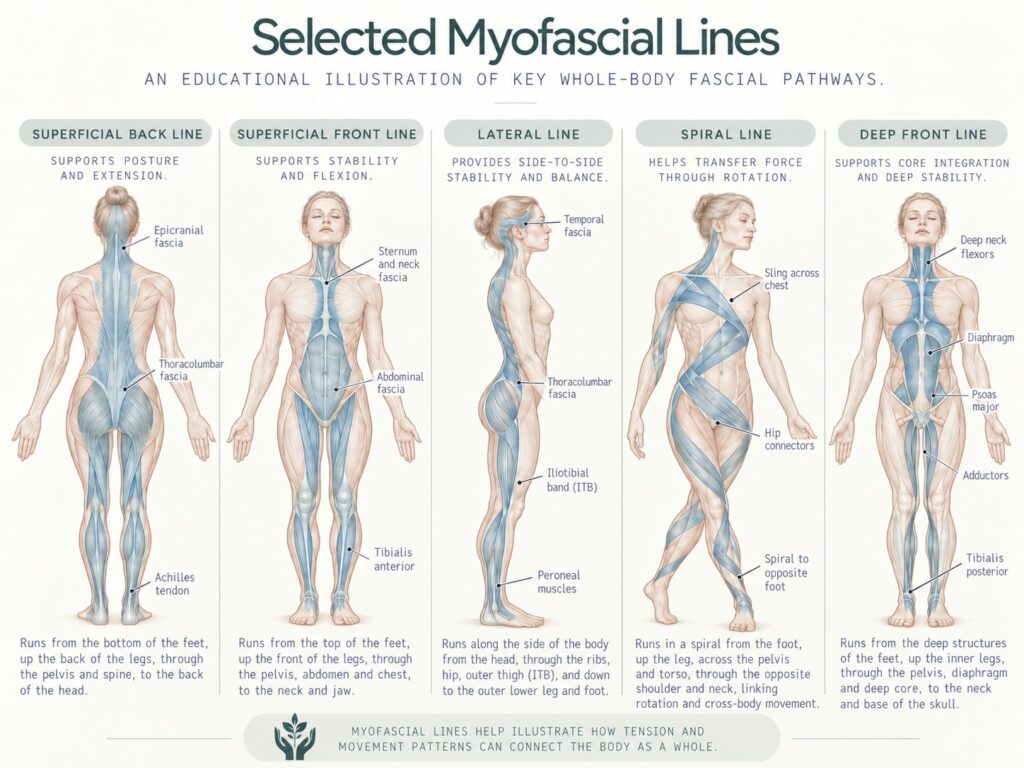
Tom Myers introduced the Anatomy Trains model, describing proposed lines of myofascial connection throughout the body and offering practitioners another framework for considering movement patterns.
Erik Dalton subsequently developed Myoskeletal Alignment Techniques, drawing on approaches including manual therapy, joint mobilization and structural bodywork.
Although these methods differ in their techniques and theoretical foundations, they share an interest in looking beyond isolated symptoms to understand broader patterns of physical function.
This evolution also provides important context for another approach that brings several of these traditions together: Zen Bodytherapy.
Zen Bodytherapy: Bringing Structure, Movement and Awareness Together
Zen Bodytherapy was developed by William “Dub” Leigh, a practitioner whose work drew upon three particularly influential teachers.
Leigh studied Structural Integration with Dr Ida Rolf, learning an approach focused on the body’s physical structure and connective tissues.
He subsequently trained with Dr Moshe Feldenkrais, whose work introduced a deeper understanding of movement, functional learning and body awareness.
His third major influence was Tanouye Tenshin Rotaishi, a Hawaiian Zen master and martial artist whose teachings explored the traditional concept of ki, or vital energy, alongside physical and mental discipline.
Through these experiences, Leigh developed Zentherapy, incorporating elements of structural bodywork, movement education and Zen training.
Zen Bodytherapy is one component of this broader tradition, drawing particularly on Structural Integration while recognizing the relationship between physical structure, movement and awareness.
What interests me about this approach is its emphasis on considering the person as a whole, rather than looking at individual muscles or areas of discomfort in isolation.
In November, I will be furthering my studies in Zen Bodytherapy, with the intention of integrating this work into my existing practice.
After more than 30 years working in naturopathic care and therapeutic bodywork, continuing my education remains an important part of how I develop my skills and the support I offer my clients.
For me, this is a natural progression of an approach I have always valued: understanding how the body’s different systems interact, and tailoring treatment to the individual.
What Modern Fascia Research Tells Us
Our understanding of fascia has developed considerably over recent decades.
Once discussed primarily as structural connective tissue, fascia is now recognized as a complex tissue system involved in force transmission, sensory signaling and movement.
Research by German scientist Robert Schleip has contributed significantly to this understanding, particularly through investigations into fascia’s sensory receptors and its relationship with the nervous system.
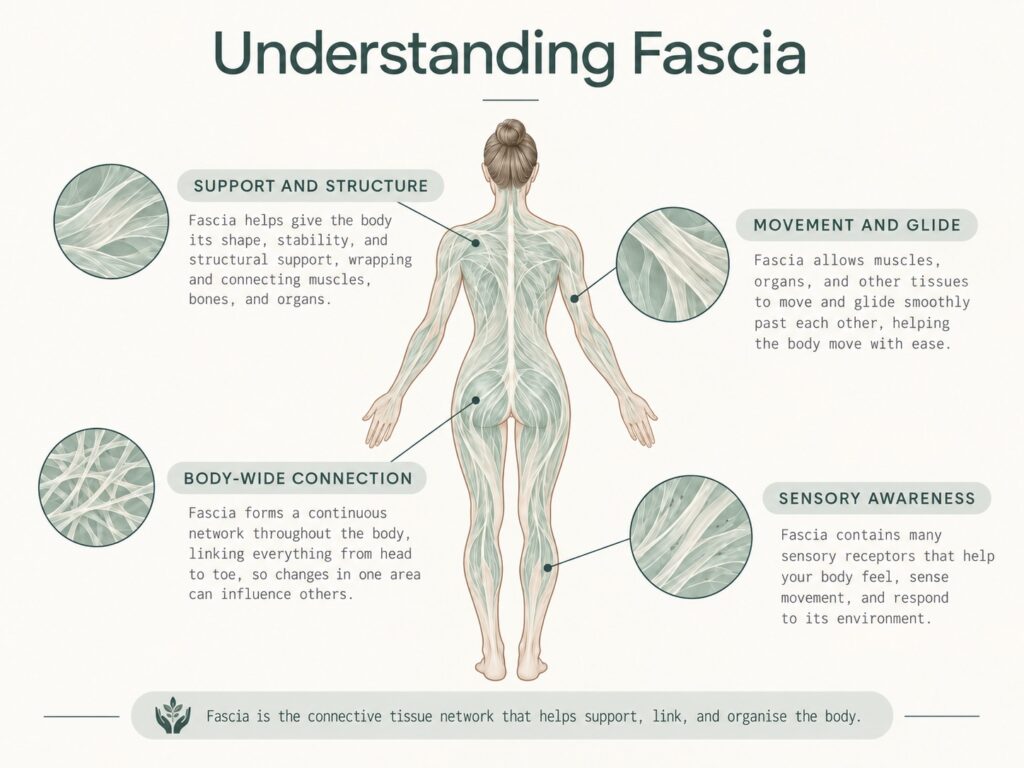
These discoveries have encouraged researchers and practitioners to examine not only the mechanical properties of connective tissue, but also how touch, pressure and movement may influence the nervous system’s response.
Research into fascia and hands-on bodywork continues to develop, particularly around the relationship between connective tissue, pain, movement, and the nervous system.
For me, this growing understanding sits alongside more than 30 years of practical experience and the changes I see in clients during treatment. Both contribute to the way I work, combining established techniques, continuing education, and an individualized approach to every client.
How I Apply These Principles in My Practice
In my work, I consider the relationship between muscular tension, connective tissue, movement and the demands placed on the body.
Persistent lower back, neck, or shoulder discomfort, for example, may involve more than a single sensitive muscle. Daily movement habits, repetitive activity, previous injuries, and patterns of compensation can all be relevant to understanding the discomfort.
By looking at these factors together, I can tailor hands-on treatment to the individual’s needs rather than applying exactly the same approach to everyone.
Over the years, I’ve seen clients arrive with headaches and leave a session without the pain they came in with. I’ve also worked with people who have experienced shoulder pain for months, including those who have previously tried physical therapy, and seen them experience significant relief after a single treatment. These experiences reinforce why I place so much importance on careful assessment, understanding the individual, and recognizing patterns of tension that may be contributing to their discomfort.
Myofascial release and trigger point therapy are important parts of this work, particularly for clients experiencing persistent muscular tension, restricted movement or discomfort associated with physical strain.
I also believe that helping people understand their own bodies is valuable. Awareness of movement patterns and the factors contributing to recurring tension can complement the work we do during a session.
For clients interested in learning practical techniques to use independently, I also offer a Fascial Release Class, with personalized guidance on self-myofascial release and trigger point techniques.
A More Connected Approach to Pain and Movement
From early traditions of hands-on healing to the work of Travell, Simons, Rolf, Feldenkrais and Leigh, the history of trigger point therapy and myofascial release reflects an evolving understanding of the human body.
Each generation of practitioners has contributed different ideas about how structure, movement, sensation and discomfort relate to one another.
Today, these approaches continue to develop alongside research into fascia, pain and the nervous system.
As I continue expanding my studies and bringing new knowledge into my practice, my focus remains the same: providing thoughtful, individualized bodywork that supports greater comfort, mobility and physical well-being.
Interested in Myofascial Release or Trigger Point Therapy?
If you are experiencing persistent muscle tension, recurring knots or restricted movement, you can learn more about my Myofascial Release + Trigger Point Therapy sessions in Playa del Carmen.
Together, we can explore an approach tailored to your individual needs.
Frequently Asked Questions
Trigger point therapy focuses on sensitive areas within muscles that may cause localised or referred pain. Myofascial release takes a broader approach, working with connective tissue.
Fascia is a network of connective tissue that surrounds, supports and connects muscles, bones, nerves and organs. It plays an important role in the body’s structure, movement and sensory awareness.
Yes. Trigger points can sometimes produce referred pain, meaning discomfort is felt somewhere other than the sensitive muscle itself. For example, certain trigger points around the neck and shoulders may contribute to discomfort extending into the arm or head.
Myofascial release can help address persistent muscular tension and restricted movement. In my practice, I regularly work with clients experiencing neck, shoulder, and lower back discomfort, and some experience significant relief following treatment. Each session is tailored to the individual’s symptoms and needs.
Some areas may feel tender, particularly when working with sensitive muscles. However, treatment should be adapted to your comfort and tolerance. Communication with your practitioner is important throughout the session.
Zen Bodytherapy is a bodywork approach developed by William “Dub” Leigh, drawing on the teachings of Dr Ida Rolf, Dr Moshe Feldenkrais and Zen master Tanouye Tenshin Rotaishi. It brings together principles of structural bodywork, movement awareness and Zen training. Emily is continuing her professional studies in this approach with the intention of integrating it into her practice.
The number of sessions depends on your individual circumstances, including the nature and duration of your discomfort. Some people may notice improvements following an initial session, while others may benefit from ongoing treatment. Emily takes an individualised approach based on each client’s needs.