
The history of naturopathy spans thousands of years, with many of its earliest teachings still relevant to how we approach health today. From the relationship between nutrition and inflammation to the influence of stress on digestion, ancient medical traditions explored connections that continue to inform modern naturopathic practice.
Throughout my 30-plus years in naturopathic care and therapeutic bodywork, the relationship between the body’s different systems has been central to how I approach health. Understanding why symptoms develop, what may be contributing to them and how we can support the body’s natural physiological processes is fundamental to naturopathic practice.
A woman in her 40s came to see me experiencing chronic pain and tension. During my assessment, I noticed an asymmetry in her breasts and asked about a dressing covering an area that, she explained, had been discharging fluid for several months. Concerned by these observations, I referred her for urgent medical assessment, which subsequently confirmed a diagnosis of breast cancer.
This experience illustrates why I place such importance on taking the time to listen, observe, ask questions and understand the wider circumstances surrounding a person’s health. Sometimes, the most significant findings are unrelated to the symptoms that initially brought someone to see me.
By addressing the physical, nutritional and emotional aspects of health, we can create the conditions that support the body’s innate capacity to heal.
Emily Schwarze
Her experience illustrates an important aspect of naturopathy: looking beyond the immediate symptoms to understand the wider circumstances surrounding a person’s health.
With more than five million Americans reported to have visited naturopathic doctors in 2023, there is growing interest in this approach to healthcare. Its origins, however, extend far beyond the modern consultation room.
What is Naturopathy?
Naturopathy is a holistic system of healthcare that combines traditional therapeutic practices with modern health science to address underlying factors contributing to illness and support the body’s natural capacity for healing.
Naturopathy encompasses a range of therapeutic approaches. Within my own practice, these include botanical medicine, clinical nutrition, homeopathy, bioresonance optimization, therapeutic bodywork, lifestyle modification and techniques to support nervous system regulation.
Physical, emotional, nutritional and environmental factors are all considered when assessing an individual’s health, reflecting principles found within traditional, complementary and integrative medicine.
This is why an initial naturopathic consultation can last between 1-2 hours. Understanding someone’s health history, digestive function, dietary habits, sleep, stress levels and lifestyle takes time.
Two people may experience very similar symptoms, yet the circumstances contributing to those symptoms can be quite different. Understanding those differences is an important part of developing an individualized approach to care.
Where did Naturopathy Originate?
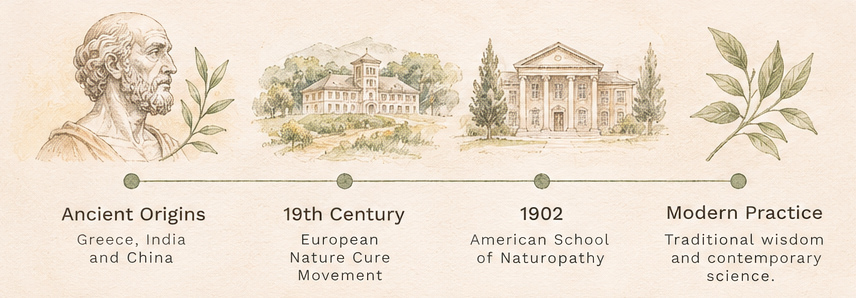
Although naturopathy became formally established as a healthcare discipline around the beginning of the 20th century, the history of naturopathy can be traced back much further, with many of its philosophical foundations rooted in ancient medical traditions.
Hippocrates, Ayurveda and Traditional Chinese Medicine
Around 400 BCE, Hippocrates, often referred to as the Father of Medicine, emphasized the influence of food, lifestyle and the environment on human health.
The familiar expression traditionally attributed to him, “Let food be thy medicine,” captures a philosophy that remains central to naturopathic nutrition today.
Similar principles can be found in other ancient medical systems. India’s Ayurvedic tradition developed an extensive understanding of medicinal plants, nutrition and the importance of balance within the body. Traditional Chinese medicine also explored the relationship between food, herbal remedies, energy and physical health.
Turmeric is a particularly interesting example. Its traditional use in Ayurvedic medicine for concerns associated with inflammation dates back centuries, and its therapeutic properties continue to be explored within modern nutritional and botanical medicine.
Although these are distinct systems of medicine, their recognition of the relationship between daily living and health shares important parallels with naturopathic philosophy.
The European Nature Cure Movement
During the 19th century, Europe’s nature cure movement helped establish the foundations of modern Western naturopathy.
Vincent Priessnitz, an Austrian farmer, reportedly observed injured animals bathing in streams and began exploring the therapeutic applications of water. His work helped establish hydrotherapy, incorporating baths, compresses and other water-based treatments into natural healthcare.
Sebastian Kneipp, a German priest, developed these ideas further, combining hydrotherapy with medicinal herbs, nutrition, movement and balanced living. His influential book, My Water-Cure, introduced these practices to a wider audience.
Johann Schroth was another important figure during this period, exploring therapeutic nutrition and the use of plant-based diets within natural medicine.
What is particularly interesting about these early practitioners is how much importance they placed on the conditions of everyday life. Food, movement, rest and our surrounding environment were considered integral to health long before many of these relationships became the subject of modern scientific research.
The Establishment of Naturopathy in America
By the late 19th century, the European nature cure movement was influencing practitioners across North America, including John H. Tilden, who advocated drugless healing through nutrition and lifestyle.
In 1902, Benedict Lust, who had trained under Sebastian Kneipp, established the American School of Naturopathy in New York. His contribution to the development of the profession earned him recognition as the Father of American Naturopathy.
His wife, Louisa Lust, was also instrumental in the movement, helping establish the school and promoting natural approaches to women’s health.
In 1913, Henry Lindlahr published Nature Cure, further developing the philosophical foundations of naturopathy, particularly its emphasis on the body’s inherent capacity for healing.
These practitioners helped transform a collection of traditional therapeutic practices into a more formally established system of healthcare.
Dr. Bernard Jensen and the Natural Hygiene Movement
One of the most influential figures in the development of natural medicine was Dr. Bernard Jensen (1908–2001), a chiropractor and naturopath who trained under Benedict Lust.
Jensen became a prominent advocate of natural hygiene, a movement that placed considerable emphasis on nutrition, digestive health and lifestyle as foundations of physical well-being.
At his California sanitarium, Jensen worked extensively with dietary approaches, including raw foods, fresh juices and fasting.
His 7-day tissue cleansing program, described in Dr. Jensen’s Guide to Diet and Detoxification, incorporated juicing, fasting and bowel cleansing, based on his theories about the accumulation and elimination of toxins within the body. His teachings influenced many of the cleansing philosophies that subsequently developed within naturopathy.
Among the patient experiences associated with his work is that of Maria, a 50-year-old experiencing digestive difficulties who reported renewed vitality and improvements in her symptoms following Jensen’s raw food protocols.
Jensen’s philosophy placed nutrition at the center of natural healthcare, a perspective he communicated throughout his professional life.
Nutrition is the only remedy that can bring full recovery and can be used with any treatment. Remember, food is our best medicine!
Dr. Bernard Jensen
Jensen’s Contribution to Iridology
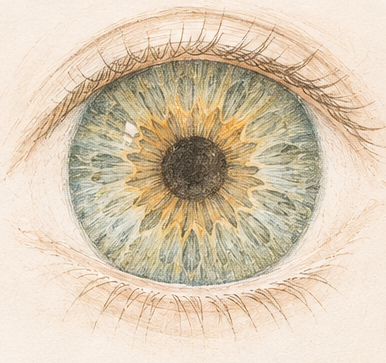
Jensen was also widely recognized for his work in iridology, a traditional naturopathic assessment practice that examines the colors, patterns and structures of the iris.
He developed detailed iris charts proposing relationships between specific areas of the iris and different organs and systems within the body. His publication, The Science and Practice of Iridology, became an influential text for practitioners studying this approach.
His educational legacy continues through practitioners including Ellen Jensen, who has trained thousands in his methods.
Across more than 50 books, Jensen also shared his knowledge of nutrition, natural hygiene, skin brushing and stress reduction, making these concepts accessible to a much wider audience.
Other influential practitioners included Otis G. Carroll, who developed his own method of food intolerance assessment, and Dr. John Bastyr, whose work helped bring traditional naturopathic knowledge and modern science together. His legacy continues through Bastyr University, established in 1978.
Their contributions helped sustain naturopathy during a period of significant change in modern healthcare.
The Six Principles of Naturopathy
Despite the considerable evolution of naturopathic medicine over the past century, 6 fundamental principles continue to guide its philosophy and practice.
These principles influence how practitioners assess health concerns, select appropriate therapies and educate their clients.
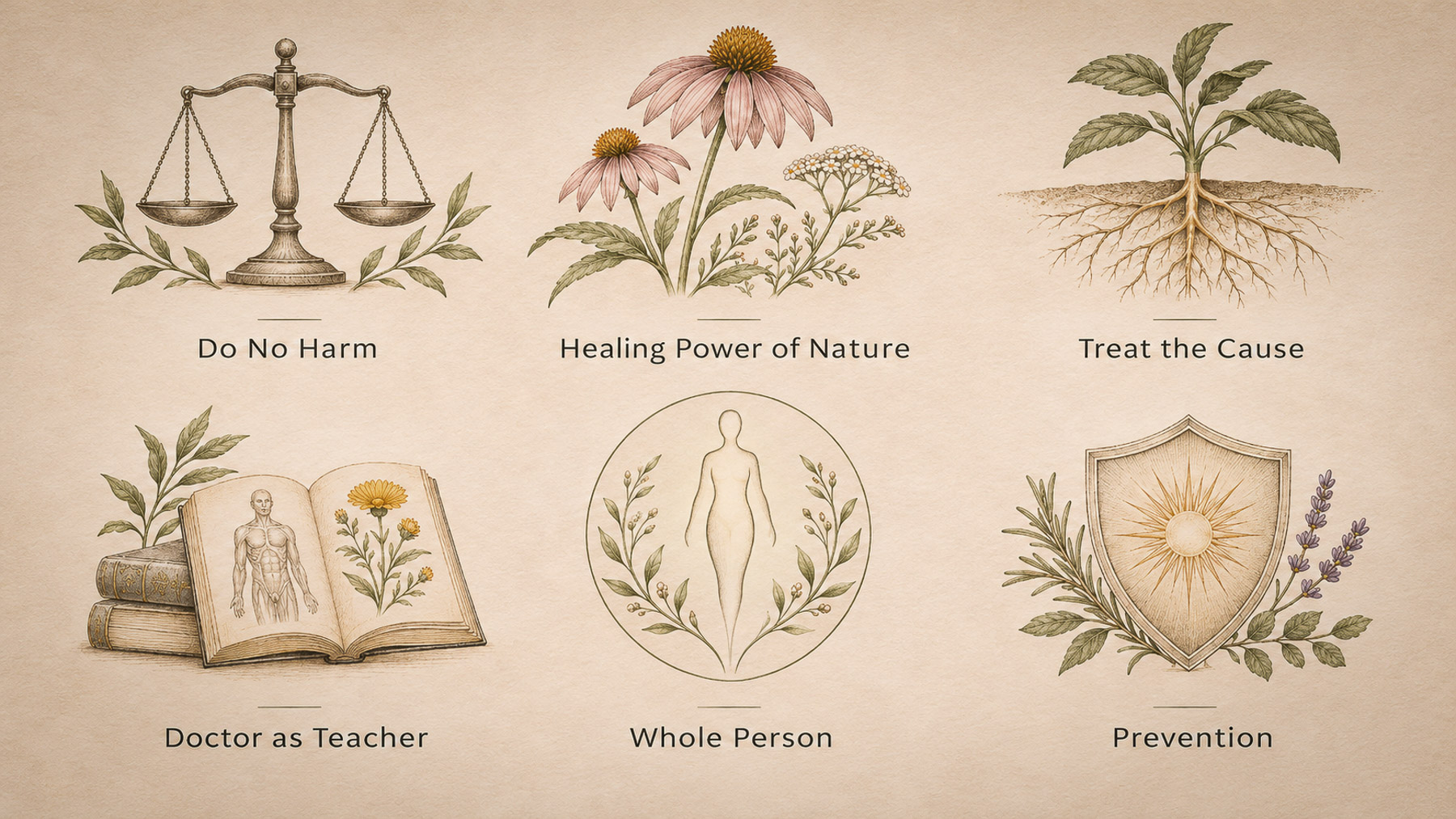
1. First, Do No Harm (Primum Non Nocere)
Naturopathic care prioritizes approaches that minimize the risk of harm, taking into consideration the individual’s health history, circumstances and existing treatments.
For someone experiencing irritable bowel syndrome (IBS), for example, appropriate dietary modifications may be considered as part of an individualized approach to managing their symptoms.
Natural therapies must also be selected carefully, as their suitability varies from person to person.
2. The Healing Power of Nature (Vis Medicatrix Naturae)
The human body possesses remarkable mechanisms for maintaining balance, repairing tissue and responding to physical challenges.
Naturopathy seeks to support these processes by considering the conditions the body needs to function effectively.
Nutrition, restorative sleep, movement, bodywork and therapeutic approaches may all have a role, depending on the individual’s needs.
3. Identify and Treat the Cause (Tolle Causam)
Symptoms provide us with valuable information about what may be happening within the body.
Persistent fatigue, for instance, can have many contributing factors. If an appropriate assessment identifies a vitamin D deficiency, addressing that deficiency may help improve symptoms.
Symptoms provide us with valuable information about what may be happening within the body.
Persistent fatigue, for instance, can have many contributing factors. If an appropriate assessment identifies a vitamin D deficiency, addressing that deficiency may help improve symptoms.
Other potential sources of health concerns can be less obvious. Oral and dental health is an area I pay particular attention to, as underlying dental infections, including persistent infections around previously root canal-treated teeth, may go unnoticed. Where I suspect an unresolved dental issue, I recommend further investigation by a qualified dental practitioner.
Exploring why a health concern has developed, rather than concentrating exclusively on its outward presentation, is fundamental to naturopathic practice. It requires curiosity, thorough questioning and a willingness to consider connections that may not be immediately apparent.
4. Doctor as Teacher (Docere)
Education has always been an important part of naturopathy, and it is something I place considerable value on in my own practice.
When people understand how their bodies function and why certain recommendations are being made, they are better equipped to make informed decisions about their health.
This might involve understanding how different foods affect digestion, recognizing the body’s response to stress or learning mindfulness techniques to support emotional well-being.
5. Treat the Whole Person (Tolle Totum)
Our physical health is influenced by many interconnected factors, including emotional well-being, trauma, genetics, nutrition, environmental exposures and daily habits.
For someone experiencing depression, for example, nutritional and lifestyle support may be considered alongside appropriate psychological and medical care.
Looking at these factors collectively allows for a broader understanding of the individual’s health, particularly when they are experiencing several seemingly unrelated symptoms.
6. Prevention (Praevenire)
Prevention is concerned with understanding individual health risks and developing habits that support long-term well-being.
Research into naturopathic approaches to cardiovascular health, for example, has examined how comprehensive dietary and lifestyle interventions can contribute to reducing cardiovascular disease risk.
For me, prevention also involves helping clients develop a better understanding of their bodies, so they can recognize changes in their health and respond appropriately.
How the Six Principles Work Together
These principles rarely operate independently in practice.
Consider James, a 35-year-old living with diabetes who incorporated dietary changes and stress reduction into his naturopathic care and experienced improvements in his HbA1c levels, a measure of average blood glucose.
Research into whole-system naturopathic medicine has explored how multiple therapeutic approaches can work together to support people managing chronic health conditions.
James’s experience illustrates how nutrition, education, individualized care and prevention can overlap, working alongside appropriate medical management.
How Naturopathy Has Evolved Over the Past Century
Naturopathy flourished during the 1920s, with sanitariums and natural health institutions promoting plant-based nutrition, hydrotherapy and natural hygiene.
However, the publication of the Flexner Report in 1910 had significantly changed the direction of North American medical education. The subsequent development of antibiotics, including the widespread introduction of penicillin during the 1940s, transformed the treatment of infectious diseases and the wider healthcare landscape.
By the 1950s, naturopathy had declined in prominence, although practitioners such as Bernard Jensen and John Bastyr continued to teach and develop its principles.
The Revival of Naturopathic Medicine
The latter part of the 20th century saw renewed interest in natural medicine, driven partly by advances in nutritional science and growing public interest in holistic and preventive healthcare.
The establishment of the Canadian College of Naturopathic Medicine in 1978 contributed to the development and standardization of naturopathic education in North America.
The profession has also developed internationally. In Australia, the Naturopaths & Herbalists Association of Australia has played an important role in representing natural medicine practitioners, with figures cited in 2025 describing approximately 6,000 practitioners.
In India, naturopathy exists alongside other established traditional systems of medicine, including Ayurveda, with naturopathic services reported across more than 400 hospitals.
Naturopathy in Modern Healthcare
Contemporary naturopathic practice continues to develop alongside research into nutrition, mental health, chronic disease and preventive healthcare.
Research cited in 2025 reported a 30% reduction in anxiety among participants in naturopathic mindfulness-based programs.
Technology has also expanded the accessibility of naturopathic care. In 2024, approximately 40% of naturopathic doctors were reported to offer virtual consultations.
Meanwhile, developments in laboratory assessment, genetic testing and functional medicine have introduced additional ways of exploring individual health needs, including research into their application in complex conditions such as autoimmune disorders.
The tools available to practitioners have changed considerably since the days of Priessnitz, Kneipp and Jensen, while many of the underlying principles remain familiar.
What Is the Difference Between Naturopathy and Functional Medicine?
Naturopathy and functional medicine share an interest in understanding the underlying factors that contribute to health concerns, although their historical foundations and approaches differ.
Naturopathy draws upon traditional therapies, including botanical medicine, clinical nutrition, hydrotherapy and lifestyle modification. Historically, some naturopathic practitioners have also incorporated homeopathy.
Functional medicine places particular emphasis on investigating the relationships between biological systems, often incorporating detailed laboratory assessments, nutritional testing and microbiome analysis.
The two approaches increasingly overlap. A survey cited in 2025 indicated that approximately 65% of naturopathic doctors integrate elements of functional medicine into their practice.
The Cleveland Clinic’s Center for Functional Medicine is one example of how individualized, systems-based healthcare has also developed within established medical institutions.
For me, there is considerable value in having access to different methods of assessment.
When exploring persistent digestive concerns, for example, understanding a person’s dietary habits and symptoms is important, as is considering their health history, stress levels and other factors influencing digestive function. Where appropriate, laboratory testing can provide additional information to help guide recommendations.
The combination of traditional naturopathic knowledge and contemporary assessment methods allows for a more detailed understanding of the individual.
How I Apply Naturopathic Principles in My Practice
My background in both naturopathy and therapeutic bodywork has shaped how I understand the relationship between the body’s physical structure, physiological function and overall health.
Within my naturopathic practice, digestive health and nutrition are particularly important areas of focus. Understanding how the digestive system functions, how an individual responds to different foods and how their lifestyle may influence their symptoms provides valuable information when developing a personalized approach.
My work in myofascial release and trigger point therapy also reflects many of the same principles. When someone experiences recurring physical tension or discomfort, I consider the wider patterns that may be contributing to their symptoms, including movement habits, previous injuries and physical stress.
There is a common thread running through these different areas of my work: taking the time to understand the individual and recognizing the connections between different aspects of their health.
Education is equally important. I want my clients to understand the reasoning behind the recommendations we discuss, whether those relate to nutrition, digestive support, recovery or physical well-being.
That understanding can help them continue supporting their health long after a consultation or treatment session has ended.
The Future of Naturopathic Medicine
Like many areas of healthcare, naturopathy continues to evolve in response to scientific research, changing patient needs and developments in professional education.
Questions remain about the evidence supporting certain traditional modalities, including homeopathy, while approaches such as acupuncture have a more developed evidence base for some applications. The National Center for Complementary and Integrative Health provides information on the research and safety considerations surrounding naturopathic medicine.
Research continues to explore the potential contribution of naturopathic care to mental health and supportive care for people undergoing cancer treatment.
Professional recognition also varies considerably around the world. Figures cited in 2025 identified 23 U.S. states with naturopathic licensing, while organizations such as the World Naturopathic Federation continue to advocate for greater consistency in professional standards.
With chronic health conditions affecting a substantial proportion of the adult population, the importance of nutrition, lifestyle and preventive healthcare remains particularly relevant.
What I find most valuable about naturopathy’s evolution is the opportunity to continue learning from both traditional knowledge and contemporary science.
From Hippocrates’ teachings on nutrition to Bernard Jensen’s extensive work in natural hygiene, generations of practitioners have contributed to our understanding of the relationship between daily living and health.
There is still much to learn. After more than 30 years in practice, continuing to develop that understanding remains an important part of my work.
Interested in Naturopathic Care?
If you are experiencing ongoing digestive concerns, want to better understand the factors influencing your health or would like guidance on supporting your long-term well-being, you can learn more about my naturopathic consultations in Playa del Carmen.
I also offer a complimentary discovery call, where we can discuss your concerns and explore whether my approach is appropriate for your individual needs.
Together, we can explore an approach tailored to your individual needs.
Frequently Asked Questions
Naturopathy is a holistic system of healthcare that seeks to understand underlying factors contributing to health concerns and support the body’s natural physiological processes. It incorporates approaches such as clinical nutrition, botanical medicine, lifestyle modification and other natural therapies.
Naturopathy has philosophical connections to ancient Greek medicine, Ayurveda and traditional Chinese medicine. Modern Western naturopathy developed largely through the European nature cure movement before becoming formally established in North America in the early 20th century.
The six principles of naturopathy are:
- First, Do No Harm
- The Healing Power of Nature
- Identify and Treat the Cause
- Doctor as Teacher
- Treat the Whole Person
- Prevention
Together, these principles provide the philosophical foundation for naturopathic care.
Naturopathy draws upon traditional therapeutic practices, nutrition and lifestyle approaches. Functional medicine places particular emphasis on investigating relationships between biological systems, often using laboratory testing. Both approaches focus on individualized healthcare and can complement one another.
Yes. Naturopathic care can complement conventional medical treatment, particularly through nutrition, lifestyle support and preventive healthcare. It is important to keep your healthcare providers informed about any supplements, herbal remedies or additional therapies you are using.
Digestive health is an important area of naturopathic practice. Nutritional assessment, dietary modifications and lifestyle support may help address factors contributing to digestive discomfort. Recommendations depend on the individual’s symptoms, health history and underlying concerns.
I offer personalized naturopathic consultations in Playa del Carmen, Mexico, drawing upon more than 30 years of clinical experience. A complimentary discovery call is also available for those who would like to learn more about my approach.